IWC Schaffhausen has been producing precision timepieces in the Swiss town of Schaffhausen since 1868. Known for its engineering-led approach to watchmaking, IWC has built a reputation around iconic collections: the pilot-inspired Pilot’s Watches, the elegant Portugieser, the rugged Aquatimer, and the refined Portofino. Each of these models has its own personality, and the strap you pair with your IWC plays a significant role in shaping how the watch looks and feels on the wrist.
Whether you’re after a everyday leather strap, a robust bracelet for active wear, or something more casual for weekends, this guide covers everything you need to know about IWC strap options and how to choose the right one.
Understanding IWC Lug Widths
Before buying any replacement strap, the first thing to check is your watch’s lug width — the distance between the two lugs where the strap attaches to the case. Getting this measurement right is essential; a strap that’s even a millimetre too wide or too narrow won’t fit properly.
IWC lug widths vary across collections:
- Pilot’s Watch (standard) — typically 20mm
- Big Pilot — 22mm
- Portugieser — 20mm or 21mm depending on reference
- Portofino — 18mm or 20mm depending on the case size
- Aquatimer — 22mm, often using IWC’s proprietary soft-iron inner case system
When in doubt, check your model’s reference number and cross-reference it with IWC’s official specifications, or measure the lug gap directly with a millimetre ruler.

Leather Straps
Leather is the natural home for most IWC models, particularly the dress and pilot lines. The Portugieser has long been worn on a crocodile or alligator leather strap, and the classic Pilot’s Watch pairs beautifully with smooth calfskin or slightly textured leather.
A good IWC leather strap brings warmth and refinement that no other material quite matches. It molds to the wrist over time and develops a patina that tells the story of every day it’s been worn. For IWC’s more formal models — the Portofino, the Da Vinci, and the Portugieser — leather is the obvious and traditional choice.
The practical consideration with leather is moisture: it doesn’t cope well with water, sweat, or humidity. If you wear your IWC daily and live in a warm climate, plan for the strap to need replacing every year or two, or consider a leather-top, rubber-lined hybrid for better durability.

Steel Bracelets
The Pilot’s Watch line, particularly the Mark series and the Pilot’s Watch Chronograph, is often paired with steel bracelets for a more robust, everyday look. Steel is practically indestructible, easy to clean, and handles sweat and moisture without any concern.
For the Aquatimer — IWC’s dedicated dive watch — a steel bracelet makes a strong case as the primary choice. It matches the tool-watch purpose of the model and adds a sense of solidity that complements the larger case sizes.
The main trade-off with steel bracelets is weight. IWC cases are already substantial, and a bracelet adds noticeably to the overall heft. This is something to consider if you prefer a lighter wear experience.
Rubber Straps
Rubber straps make the most sense on IWC’s sport models, especially the Aquatimer. Fully waterproof, easy to rinse after diving or swimming, and comfortable against bare skin in warm weather, rubber is the practical workhorse of strap materials.
For Pilot’s Watch owners who want a more casual, outdoorsy look — particularly on larger references like the Big Pilot — rubber also works well. It brings the watch closer to the spirit of a tool instrument and is forgiving in demanding conditions.
Quality aftermarket IWC rubber straps in the correct lug width are widely available and represent one of the most cost-effective ways to expand how you wear an existing IWC.
NATO and Nylon Straps
NATO straps have a long association with pilot and military watches, which makes them a particularly natural fit for IWC’s Pilot’s Watch collection. A simple two-piece nylon strap in olive, black, or khaki brings out the utilitarian, aviation-inspired character of those models without any pretension.
They’re also the lightest and most breathable option, ideal for travel or warmer months when you want something no-fuss that can be swapped in seconds. The only consideration is that they run slightly thicker than a regular strap due to the pass-through design, which can create a small gap between the case and the wrist.
Fabric and Textile Straps
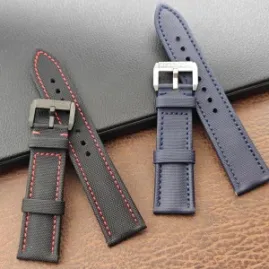
IWC has offered jacquard-woven fabric straps on some limited references and special editions, and aftermarket fabric straps are increasingly popular as a relaxed alternative to leather. For the Portofino or a smaller Pilot’s Watch, a refined fabric strap in a neutral tone can bridge the gap between casual and dressed, working equally well with a weekend outfit or a smart blazer.
Choosing the Right Strap for Your IWC Model
Pilot’s Watch / Mark series — leather for everyday wear; NATO or rubber for a more casual, tool-watch feel; steel bracelet for the most durable daily option.
Big Pilot — the large 46mm or 43mm case deserves a substantial strap. Thick leather or a wide rubber strap tends to balance the case best. NATO works well here for a lighter feel.
Portugieser — leather is the traditional and most harmonious choice for the Portugieser’s elegant, dress-forward character. A crocodile or smooth calfskin strap is the classic pairing.
Portofino — the thinnest and most refined of the IWC collections. A slim leather strap in brown or black keeps the watch looking elegant. Steel bracelets can feel incongruous on the dressier Portofino references.
Aquatimer — rubber for water use; steel bracelet for everyday versatility; a bold NATO for a sporty casual look.
Caring for Your IWC Strap
Leather: Wipe down with a dry cloth after each wear to remove moisture. Apply a small amount of leather conditioner every few months. Store your watch strap-side up in a cool, dry place, and keep it away from direct sunlight, which accelerates fading and drying.
Steel bracelet: Rinse with warm water and a soft brush periodically to clear salt and sweat from between the links. A thorough clean every few months keeps the bracelet looking sharp.
Rubber: Rinse with fresh water after contact with salt water or chlorine. A mild soap and soft cloth will handle any deeper cleaning. Avoid prolonged exposure to oils and certain solvents which can degrade rubber over time.
NATO/Fabric: Hand wash with mild soap and allow to air dry completely before wearing again. Most fabric straps can be washed every few weeks if worn regularly.
Final Thoughts
IWC builds watches that are engineered to last decades, and the right strap is what makes wearing one every day a pleasure rather than a compromise. Whether you’re drawn to the pilot heritage of the Pilot’s Watch, the refined elegance of the Portugieser, or the dive-ready performance of the Aquatimer, there’s a strap configuration that brings out the best in your watch. The good news is that experimenting with straps is one of the most affordable and reversible ways to completely change how an IWC looks and feels — and it’s well worth exploring.
Frequently Asked Questions
What lug width does the IWC Pilot’s Watch use?
The standard Pilot’s Watch typically uses a 20mm lug width, while the Big Pilot uses 22mm.
What lug width does the IWC Portugieser use?
The Portugieser uses either a 20mm or 21mm lug width depending on the reference.
What strap material suits the IWC Aquatimer best?
Rubber makes the most sense for the Aquatimer since it’s fully waterproof and easy to rinse after diving or swimming. A steel bracelet is also a strong choice, matching the tool-watch purpose of the model.
How often should a leather IWC strap be replaced?
If you wear your IWC daily and live in a warm climate, plan for the leather strap to need replacing every year or two, or consider a leather-top, rubber-lined hybrid for better durability.
Are NATO straps a good fit for IWC Pilot’s Watches?
Yes, NATO straps have a long association with pilot and military watches, which makes them a particularly natural fit for IWC’s Pilot’s Watch collection.
What’s the main trade-off with a steel bracelet on an IWC?
The main trade-off is weight. IWC cases are already substantial, and a bracelet adds noticeably to the overall heft.
New to changing straps? Our watch strap guide covers sizing, materials, care and strap guides for every major watch brand.